











The species was initially detected when a strange, repetitive, insect-like ticking song was recorded in June 2024 by local birder Ouma Oluoko. After playing back the audio recording in October 2024, the team successfully lured the secretive bird out of thick brushes and scrub, confirming its presence and capturing both audio and photographic evidence.
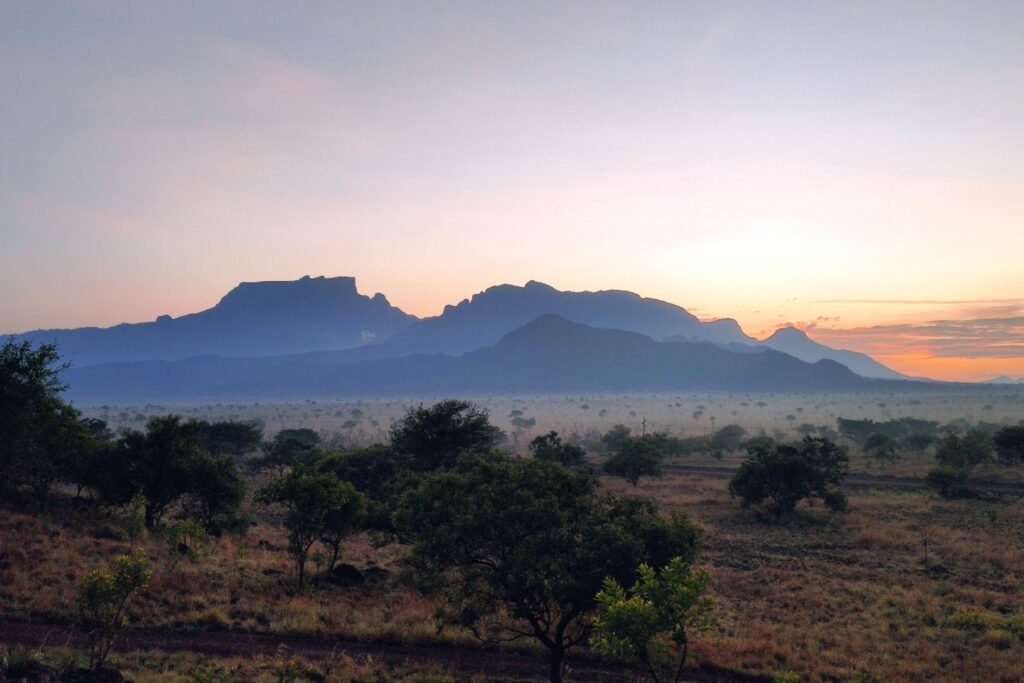
This is an emerging, high-density birdwatching hotspot located in the outskirts of Malaba, Teso North within Busia County, Western Kenya. Positioned directly along the Kenya–Uganda frontier, this ecologically diverse landscape serves as a vital frontier habitat where rocky outcrops, woodlands, and brush ecosystems overlap. It is celebrated among avitourists for hosting elusive West African and Guinea-Congo Forest species rarely documented elsewhere in Kenya
Situated within the wider Busia and Teso landscape of Western Kenya, Katotoi forms part of an overlooked ecological system that quietly supports an extraordinary overlap of habitats, bird species, migratory movements, and unique biodiversity connections extending across the Kenya–Uganda frontier. And perhaps, this is precisely what makes the hills so important.
Katotoi exists within a region many conservation conversations have historically underestimated because its landscapes do not immediately appear dramatic. There are no vast national parks here. No iconic tourism imagery dominating postcards or travel campaigns both offline and online.
The Bamboo warbler (Locustella alfredi) was first described to science as Bradypterus alfredi by German ornithologist Gustav Hartlaub in 1890, based on an adult female specimen collected in the inner regions of what was then the Congo Free State (present-day Democratic Republic of the Congo). The type locality was given as Njangalo (also spelled Nyangabo), a site west of Lake Albert in northeastern Congo, during expeditions led by the explorer Emin Pasha (Eduard Schnitzer), who shipped the specimen to Europe in late March 1890 amid broader efforts to document the region’s biodiversity.
This a mid-sized species of Old World warbler in the family Locustellidae, endemic to central and eastern Africa measures approximately 15 cm in length, featuring dark brown upperparts, a long rounded tail, white throat, and a pale supercilium, with pale-tipped undertail-coverts distinguishing it from similar species like the evergreen-forest warbler.
This skulking, insectivorous bird inhabits dense undergrowth in middle-elevation habitats (1,200–2,500 m), including bamboo thickets, moist montane forest edges, high grass, riverine marshes, and secondary growth near villages, where it forages low to the ground on insects.
And just like that, a place the people of Western Kenya have always not known became news…
We’ve been thinking about what that means. And what it doesn’t. The hills didn’t change. The bird was already there; living quietly in the shadows, held in place by a landscape that communities have tended and understood for generations. Not in reports or field studies. In their feet. In their seasons. In the daily, unglamorous act of staying.
That’s where conservation actually begins. Not with a discovery. With presence. So when we see the recognition pouring in, our first instinct isn’t pride. It is to redirect. Because none of this starts with us; the ones who document and publish and post. It starts with the community of Katotoi who never left. Who knew. Who cared long before caring had an audience.
The Bamboo Warbler endured because of them. If this moment matters, and we believe it does, then let it carry the credit back to where it belongs. To the communities whose daily lives made space for that bird to exist.
And if the world is now looking toward these hills, we’ve one ask: arrive with humility. You are not discovering something. You are finally catching up to what was always there.
{Oluokos Signature}
Typically replies within minutes
Any questions related to African luxury custom safari? #GoBetterWithOluokos! Please, share with us your African custom luxury safari requirement and our luxury safari designers will be delighted to assist you.
WhatsApp Us
Online | Privacy policy