Covering about 1,510 km², the Masai Mara National Reserve situated in south-western Kenya is an area slightly bigger than greater Los Angeles – and shares its wildlife-rich borders with a number of private conservancies, which are administered by the Maasai community. Masai Mara marks the northern-most part of the Mara-Serengeti ecosystem, famous for the annual Great Wildebeest Migration.
With its diverse habitats, the Masai Mara’s landscape is dotted with balanites and thorn trees, kopjes hills and craters, and the reserve is drained by its major rivers: the Talek, Sand, and Mara Rivers. The Masai Mara’s terrain is mostly open grassland with numerous small seasonal rivers.
During the Great Wildebeest Migration, the Mara River provides the main obstacle for the wildebeest herds to cross at about mid-year but smaller break-away groups also cross through the Sand and Talek Rivers.
Our guests in the conservancies can venture into the reserve but those staying in the reserve cannot venture into the conservancies, making the conservancies a far more exclusive and private luxury wildlife safari experience, especially during the height of the Great Migration.
Some of the best accommodation is found in the Mara Triangle, Olare Orok, Naboisho and Ol Kinyei conservancies. Because they are tribal lands, you will pass the occasional Maasai manyatta or village and even large herds of beautiful and beloved Maasai cattle. The conservancies are great examples of where people, wildlife, conservation and domestic livestock have all found a place.
Kenya’s capital and central transport hub is Nairobi, which is about 224 kilometres or 139 miles from the Mara’s eastern-most border. Safari goers usually fly into Jomo Kenyatta International Airport, then catch connecting flights from the next-door Wilson Airport to the Mara’s various airstrips. Sometimes you may drop other passengers at one airstrip before heading onto your own – almost like a ‘bus system’ for the bush.
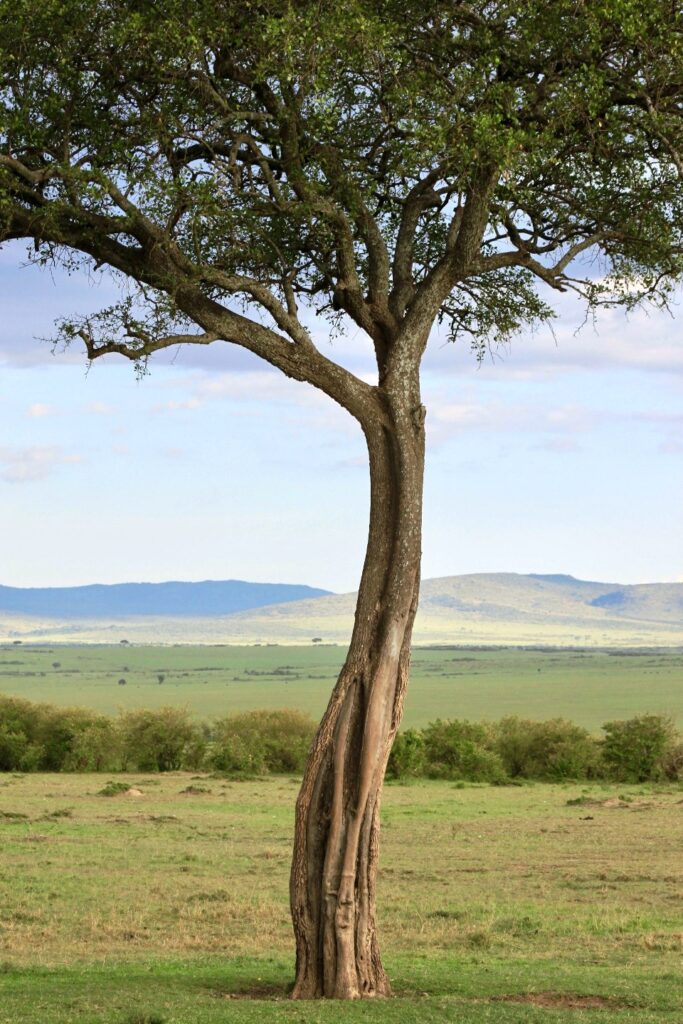
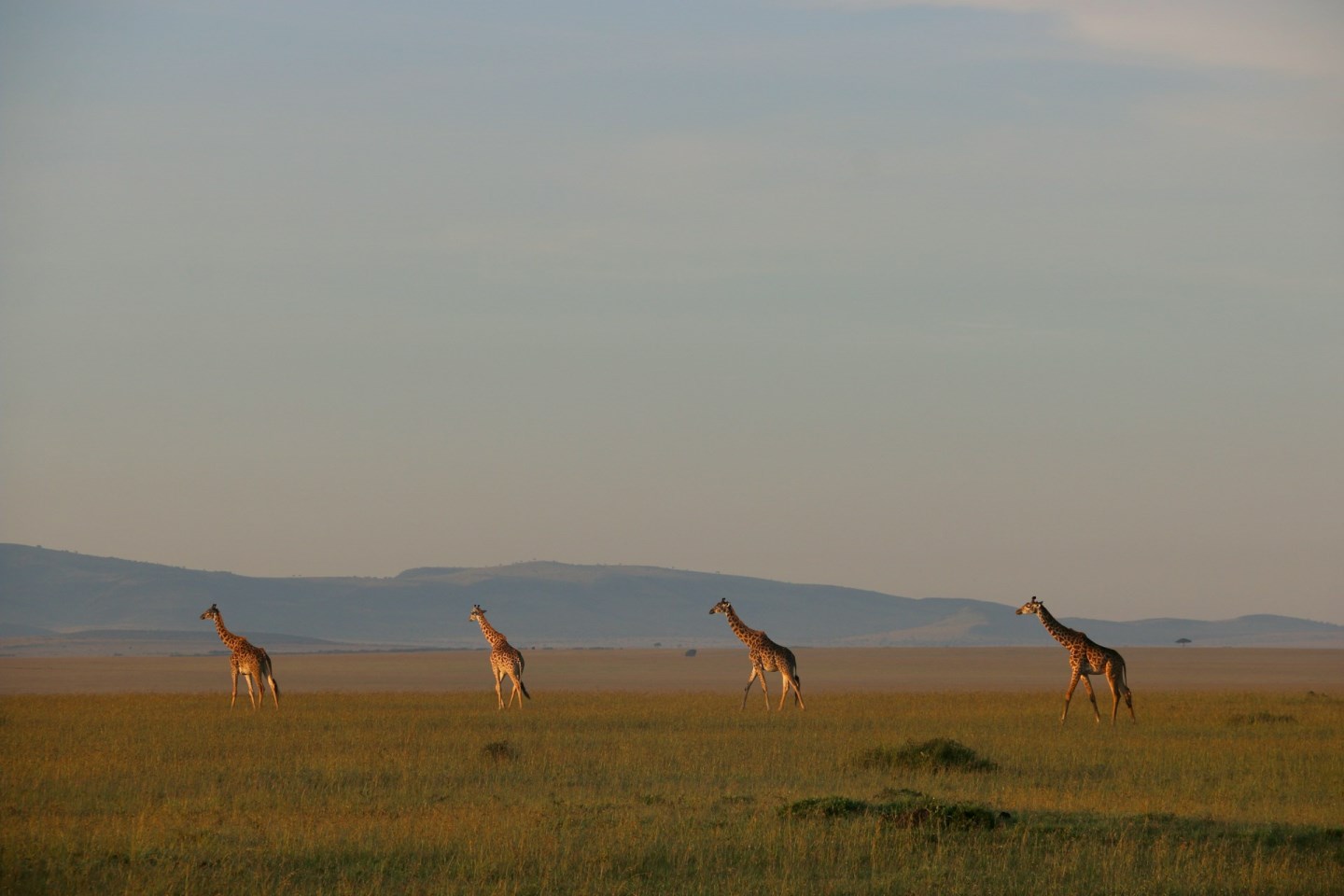
The classic Mara landscape is golden savannah: flat grasslands with plentiful grazing and the perfect terrain for cheetahs to chase down an unlucky Thomson’s gazelle. But it also has small patches of riverine forest and clumps of trees – over the centuries, elephants have made short work of keeping much of the Mara clear of trees and forests, giving it its distinct openness.
Kenya’s capital and central transport hub for the arrival of many guets is Nairobi, which is about 224 kilometres from the Maasai Mara’s eastern-most landing pont.
Our guests usually fly into Jomo Kenyatta International Airport, then catch connecting flights from the next-door Wilson Airport to the Mara’s various airstrips. Sometimes you may drop other passengers at one airstrip before heading onto your own – almost like a ‘bus system’ for the bush.
The Maasai Mara is about 280 Km. west from Nairobi City. There are two ways to get to the Maasai Mara. You can choose to drive or to fly to the Mara. Driving will take you about 5-6 hours while flying takes about 40-45 minutes. Both driving and flying to Maasai Mara has both advantages and disadvantages. Whichever method you want to use will be determined by your comfort. Here are a few things that you need to know before you decide which mode of transport you want.
Driving is much more preferred if you have a lot of time to spare for your trip and if you are curious to see Kenya’s countryside and especially if it’s your very first visit to Kenya. The drive from Nairobi to Narok will take you about 2-2.5 hours, the road is and offers a breathtaking scenery. As you drive to Maasai Mara you will you will see the suburbs of Nairobi, the Great Rift Valleyescarpment and the escarpment’s view point at Mai Mahiu where you will be able to look down the escarpment. You can also get to buy Kenyan souvenirs at this area.
In Narok there are hotels for food, toilets and you can grab some snacks as you stretch your legs. The road from Narok to Ololoolo Gate is quite rough and the drive will take you about 2-3.5 hours depending on the vehicle you are travelling in. It is however advisable to use a 4×4 vehicle, this will make your ride smoother. A drive through this road allows you to see the Maasai manyattas (traditional huts), their farms and sometime you will even see the wild animals grazing.
On the other hand if you are short of time, want a comfortable ride and your main interest is to see the wild animals only then a flight will be a good choice. There are a few companies that fly to the Maasai Mara such as SafariLink and Air Kenya. Flights take off from Wilson airport to an airstrip nearest your camp in the Mara. Flying in a light aircraft is an experience in itself. You will have an awesome time seeing an aerial view of the country. The aircrafts fly fairly low and you will be able to see several remote villages.
The classic Mara landscape is golden savannah: flat grasslands with plentiful grazing and the perfect terrain for cheetahs to chase down an unlucky Thomson’s gazelle. But it also has small patches of riverine forest and clumps of trees – over the centuries, elephants have made short work of keeping much of the Mara clear of trees and forests, giving it its distinct openness.
When people say they’ve come to see the migration, they really mean they have come to see the river crossings. Watching the wildebeest hurl themselves into the water from some jaw-dropping steep riverbanks, one after the other, in a flurry of panic, sends a surge of adrenalin through the most seasoned guests.
Many guests have only watched at the river crossings scenes on Planet Earth – the chaotic clamber of wildebeests, zebras and a few antelope species across turbulent crocodile-infested waters of the Mara River. For the successful ones, the hyenas, lions and leopards lurk amongst the riverine bushes to ambush unsuspecting victims of which a good number succumb to these abled cats.
The Great Migration of wildebeest face many obstacles, from ambushing lions to opportunistic hyenas. Yet the greatest obstacle that the animals face in the entire migration is crossing the river. It is undoubtedly the most jaw-dropping spectacle of the Great Migration too.
This is when hundreds of thousands of wildebeest and zebra cross the Mara River during their endless journey between Kenya and Tanzania.
The river is the greatest obstacle that the animals face in the entire migration. It’s a exhilarating and adrenaline raising wildlife experience to watch the herds gather at the edge of the Mara River, and then get ready before taking a deep plunge down on the riverbanks into crocodile-infested brown waters beneath, hoping to swim successfully across the river.
In spite of the many successful river crossings, many wildebeest don’t make it across the Mara river. Drowned or swept away carcasses by strong currents while others perish in the merciless jaws of the Nile Crocodiles. During the river crossings, many wildebeests get trapped and are unable to escape due to broken legs or totally disoriented and for these reason, they’re pushed further into the river as the stranded animals continue to block the escape roots.
In Maasai Mara, the river crossings on the Mara River can happen at any time during the dry season – it all depends on rainfall. As a golden rule, this will mean from June to July as the animals head northwards into Kenya from Tanzania’s vast Serengeti National Park. They follow the same trend as they head back from September to October when they make their way back to Tanzania.
Due to change in weather patterns that result into unpredicted wildlife movements, the river crossings can start even earlier and end late, around mid-November. As luxury safari experts, we would like to advise you that there are never any guarantees with wildlife sightings, and river crossings at any given time during the wildebeest migration.
We strongly recommend that you consider optimizing your holiday arrangements so that its duration coincides with the major happenings of the wildebeest migration and thus giving yourself the best chance to see a crossing. Our best tip on this is in the middle of those times: between July and September.
The negative, of course, is that this is the busiest and most expensive time to travel. Camps will be full, and there will be lots of other vehicles out there with you. But that’s the price you have to pay if you want to witness one of the world’s greatest wildlife spectacles! We politely ask for your patience and you will reap the rewards of great sightings and fantastic photos when everyone else has given up and gone elsewhere.
To be honest, during the migration period, both the Maasai Mara National Reserve and Serengeti National Park experience high number of guests and vehicle numbers are equally high. In Kenya, the peak or high season is June to October.
The best way to avoid the crowds is to consider having a stay in the privately owned nature conservancies that adjoin the Maasai Mara. They come at a premium cost and in return, they offer exclusivity, uncompromised level of luxury accommodation and excellently unlimited wildlife viewing in the exclusive-use areas. They also offer activities not permitted in the main reserve, such as night drives, bush walks and much more.
For the Serengeti sector, there are camps tucked a little further away from the migration hot spots. This guarantees you to capture all the action with very little disturbance and allow you to have some tranquil nights and very productive days.
If you’re hoping to see river crossings in northern Tanzania, give yourself five or six nights at least. As part of a 10-14 night Northern Tanzania safari, also taking in Ngorongoro Crater, Tarangire National Park and Lake Manyara, famous for its flamingos, tree-climbing lions and the soda-ash lake in the center, this would be a truly spectacular way to see some of Tanzania’s most glorious sites.
If you’re leaning towards seeing the river crossings from Kenya’s Maasai Mara, you can easily allow four to six nights and combine it with Lake Naivasha, Laikipia or Amboseli to see more of the Big Five.
Apart from more nights, viewing the wildebeest migration exclusively when you are having the well-experienced safari guide who has the great migration and the best idea on how wildlife viewing is best done. Good guiding can make your safari the great one with the unforgettable safari memories, as they keep you off the beaten track such that you can have the exclusive sighting.
The Africa’s ecosystems of the Maasai Mara and Serengeti National Park on a rotational basis are home to huge herds of wildebeest and zebras migrating in a continuous search for pasture and water respectively. The migration isn’t new to science as the journey is well known to follow a similar annual route, but the exact timing still baffles many wildlife biologists due to the changing rain patterns. Please, read more about the Great Wildebeest Migration in Kenya and Tanzania
Our guests tend to ask what the perfect Wildebeest Migration Luxury Safari itinerary looks like and to be honest, we don’t have a straight-forward answer.
To answer you in brief, each guest has a unique taste when it comes to enquiring about the wildebeest migration safari and this could be based on personality that’s strongly influenced by expectations. We have given a few good to check itineraries to serve as wildlife migration inspirations.
We don’t offer Wildebeest Migration Safari as a bucket list destination, but a rich wildlife safari experience with diversity, meaningful purpose to travel, cultural mosaic and of course, unmatched habitats that have given room to wildlife migration.
To many, The Great Wildebeest Migration is a living testimony about nature’s resilience, majesty and sustainability. This annual journey, undertaken by over two million wildebeest, zebras, and antelope across the vast plains of Kenya and Tanzania, is a spectacle that captivates guests from all walks of lives. Let Oluokos Signature bring you closer to the ever-unfolding natural spectacle with an exclusive, front-row seat to one of nature’s greatest shows on Earth.
At Oluokos Signature, we recognise that each guest is unique. That’s why our Great Wildebeest Migration Luxury Safari itineraries are carefully tailored to meet your wide taste of an African custom luxury safari.
We factor in the timing of your safari, highlights you wish to see, level of luxury safari adventure you’re comfortable with, and kind of accommodation that suits your preferance.
Whether you’re eager to capture the dramatic river crossings on camera or wish to witness the spectacle from a hot air balloon, Oluokos African custom luxury travel experts will help craft the perfect itinerary for you and your loved ones.
At Oluokos, creating effortless African holiday experiences is our cup of coffee! In Africa, our luxury safaris are packed with transformative moments that resonate deeply with you, fulfilling your holiday dreams and ideals.
{Oluokos Signature}
Typically replies within minutes
Any questions related to African luxury custom safari? #GoBetterWithOluokos! Please, share with us your African custom luxury safari requirement and our luxury safari designers will be delighted to assist you.
WhatsApp Us
Online | Privacy policy